Check the complete fence load before booking
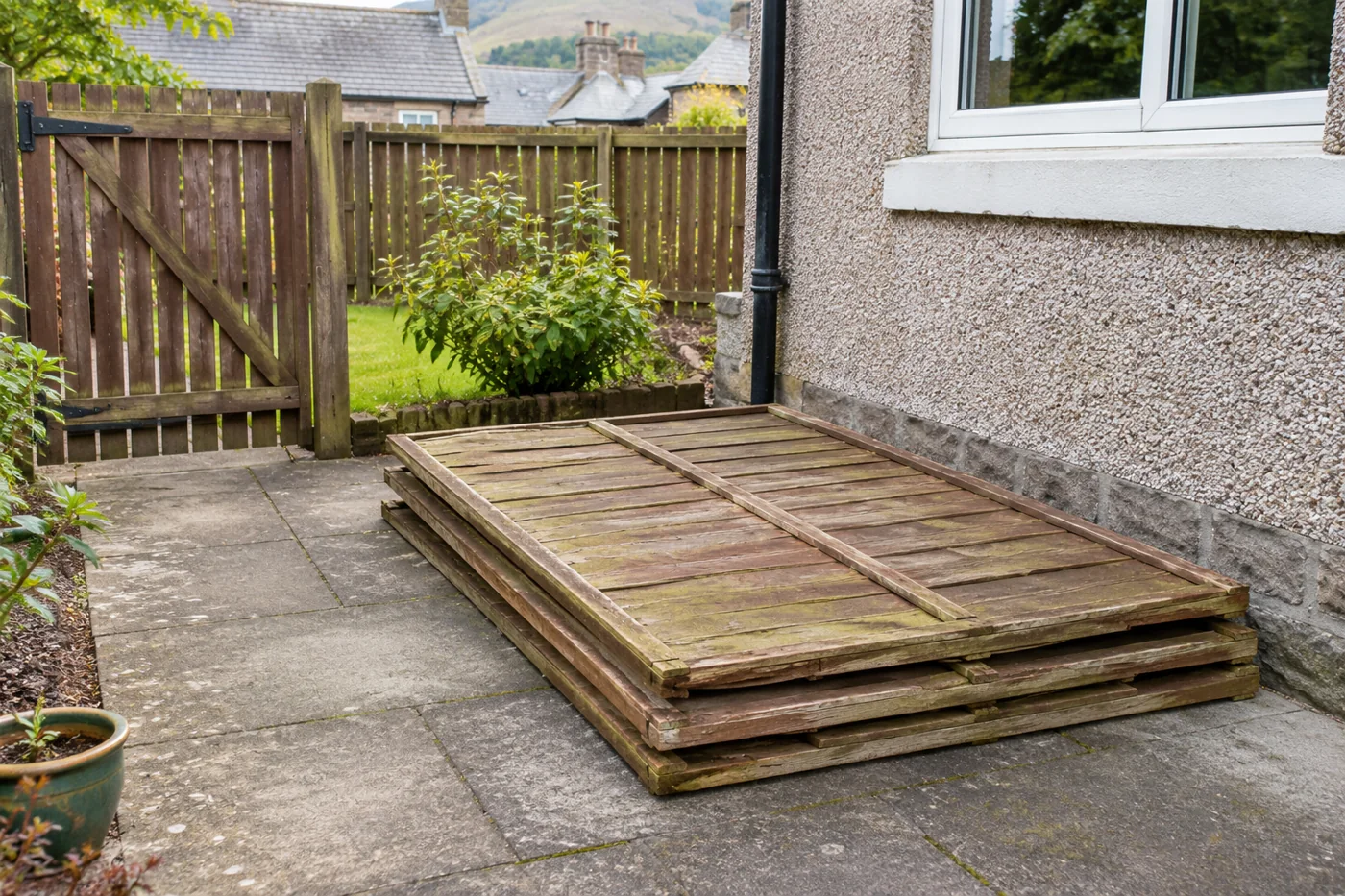
Fence panels and posts may be part of an agreed skip load, but describe the materials before anything goes in. A timber panel, a concrete post and the old concrete around the posts are different parts of the job. Tell us what the fence is made from, how many panels are being replaced and whether the posts and bases are coming out too. Do not assume a booking for garden cuttings covers the whole fence.
List anything else being cleared at the same time, such as an old gate, paving or soil from new post holes. The Alloa waste guide explains what to discuss when agreeing a load. Keep doubtful materials separate until you have an answer. Acceptance and the suitable container depend on the actual contents, not just the description “garden waste”.
Allow space for panels and weight for concrete
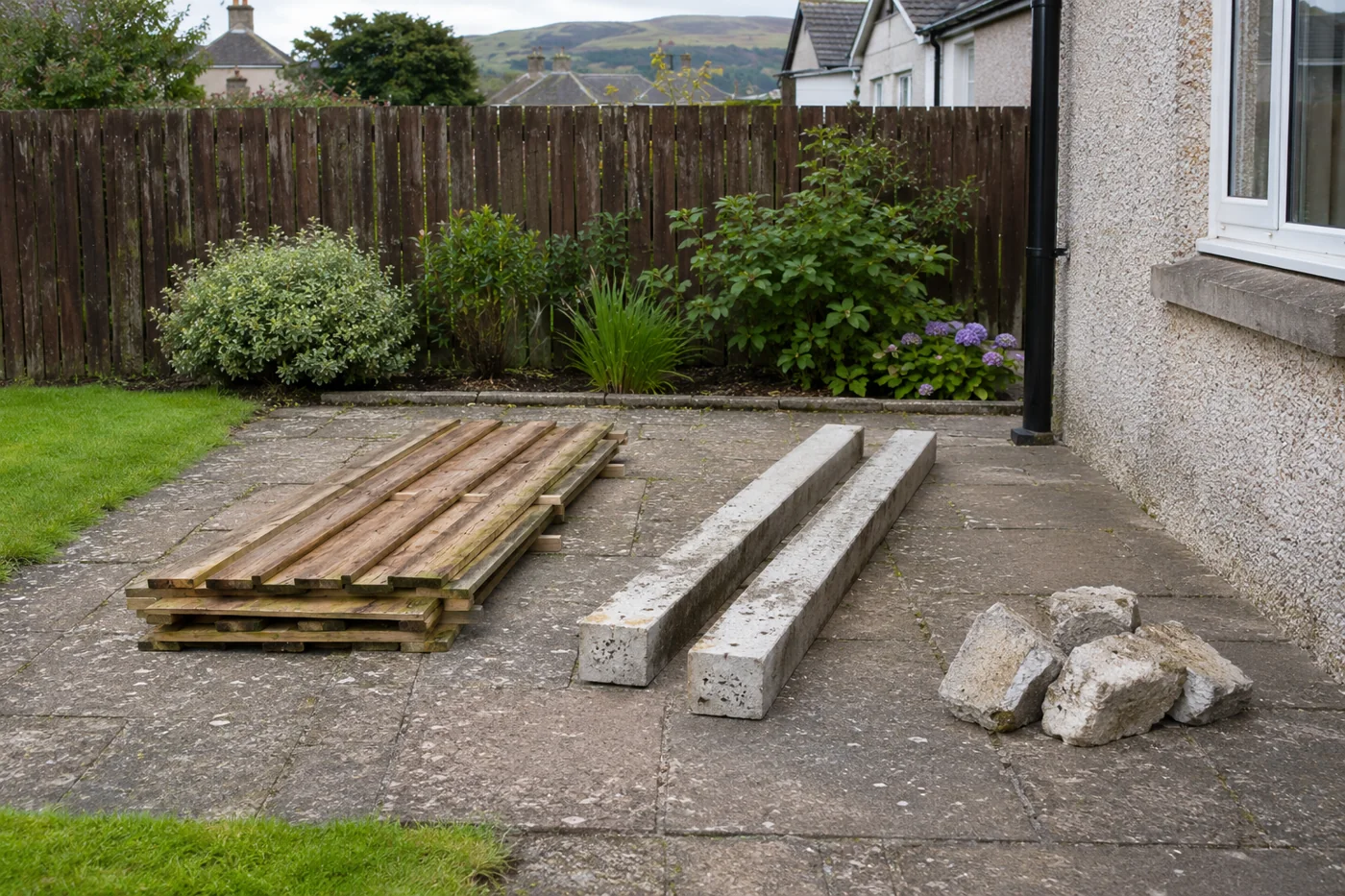
Panels take up a broad, awkward space even when the timber is relatively thin. Concrete posts and the lumps around their bases can make a heavy load without looking large. Count both, and give approximate lengths for the longest pieces. If the old concrete bases are still buried, explain that their amount is not yet known rather than leaving them out of the quote.
A larger skip is not automatically the answer to heavy concrete. The allowed materials and weight need to be agreed alongside the container size. Our skip size guide is a starting point for dimensions and capacity. Tell us whether the job is mostly timber, mostly concrete or a mixture so the booking can allow for both space and weight.
Mention coatings, treatment and anything unfamiliar
Say whether the timber is painted, stained or treated, and mention any treatment you know was used. If you do not know, say so. Weathered colour alone is not a reliable description of what is on the wood. Keep old tins of preservative, paint and other liquids out of the fence pile and ask separately how to have them taken away.
A fence clear-out can also uncover old sheets, coverings or unrelated waste tucked behind panels. Do not cut or break an unfamiliar sheet to make it fit the skip. Leave suspect material undisturbed and get advice on identification. The waste booking should describe what will actually be removed, rather than assuming everything found along the boundary can go in together. Call before adding something that was not part of the agreed list.
Agree who will take the fence down
A skip booking provides the container for agreed waste. Do not assume it includes taking down panels, digging out posts or carrying concrete from the back garden. If a fence installer is doing the work, ask which removal and loading tasks are in their quote and whether they are arranging disposal. This avoids booking a skip separately when removal is already included, or expecting work that has not been agreed.
For your own clear-out, leave unstable panels and heavy posts until suitable help is arranged. Avoid pulling at a leaning fence or trying to lift a large concrete base alone. Handling can be difficult because of the size, grip and route as well as the weight. The HSE handling advice explains these practical factors. This guide does not cover dismantling or excavation methods.
Measure the route from the fence to the skip
Check the garden gate, side passage and any turn between the fence and the proposed skip position. A panel may be wider than the opening, or too long to turn beside the house. Describe the restriction before planning the loading. Keep the gate and neighbours’ shared access clear instead of building a pile across the route you will need later.
The skip also needs a suitable position the delivery lorry can reach. Tell us about slopes, narrow gateposts and overhead obstacles. If there is no private position, check our road skip permission guide before settling on dates. A road or pavement cannot be used simply because there is a space near the garden. The arrival checklist covers the access details to have ready.
Keep long pieces inside the fill line
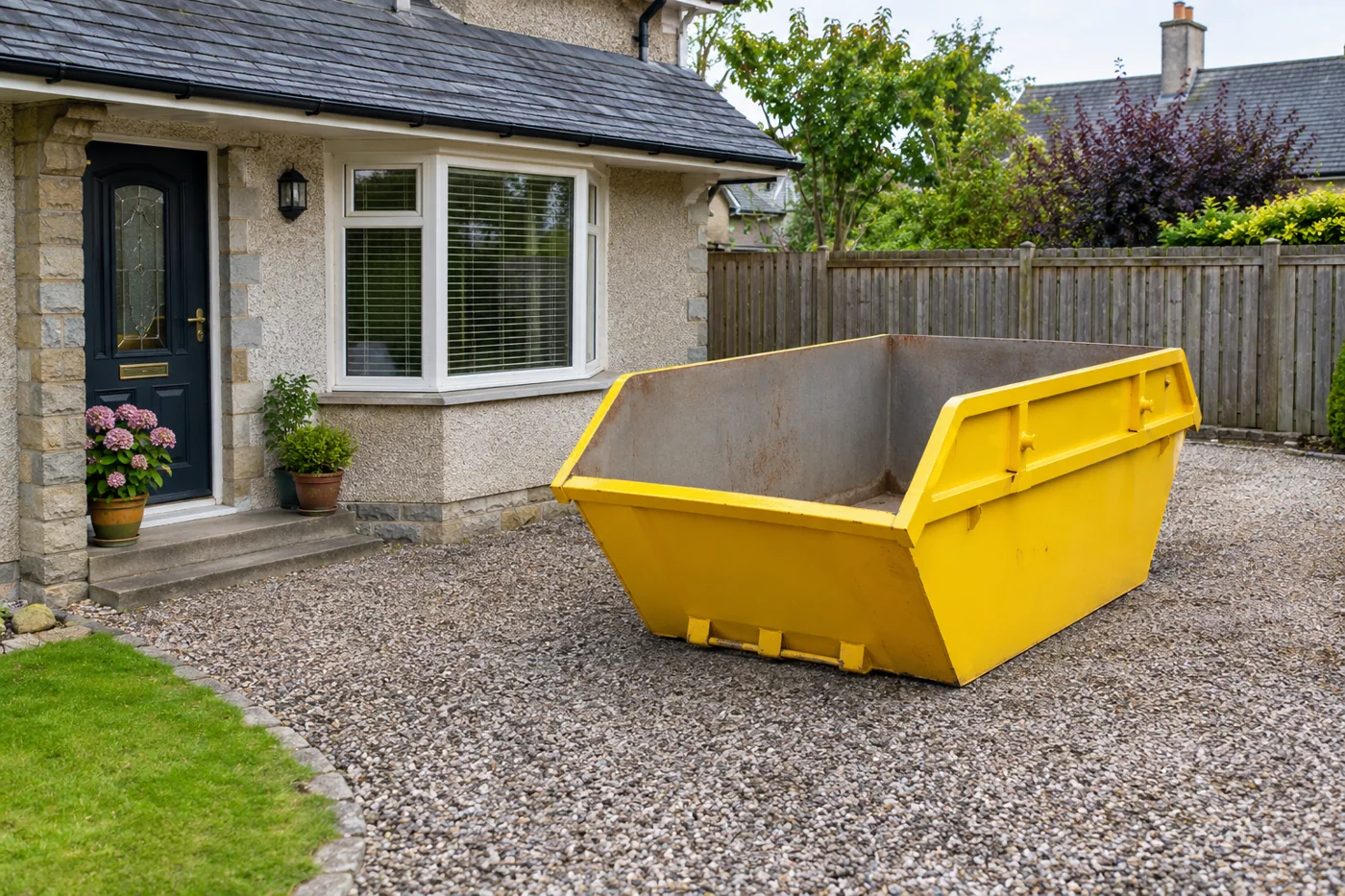
Agree how the largest pieces will fit before loading begins. Panels and posts must stay within the allowed load, without projecting over the sides or above the fill line. Do not balance long timbers across the top to gain extra space. Avoid climbing on the waste to press it down. If an item will not fit as planned, stop and ask about the next step rather than improvising.
Keep the loading side clear and work within the agreed weight allowance. Include additional rubble or soil in a fresh discussion before adding it. Our skip loading guide explains the main limits, while the soil and branches guide covers another common garden mixture. A container that still looks partly empty can already be carrying enough heavy material.
Book around the work and keep collection access open
For skip hire in Alloa, have the address, preferred dates, panel count and post materials ready when you call. Tell us whether an installer will be loading the skip and when the waste should be ready. Agree the contents, size, weight allowance and hire arrangements before the fence work starts. If the amount or type of waste changes, check with us before adding it.
Leave the lorry’s return approach clear of replacement panels, timber deliveries and parked cars. Call to arrange collection when loading is finished. For one prepared pile where you need the lifting included, ask about rubbish removal and explain the materials and carrying route. Agree acceptance and loading separately; do not assume a collection includes dismantling the remaining fence.