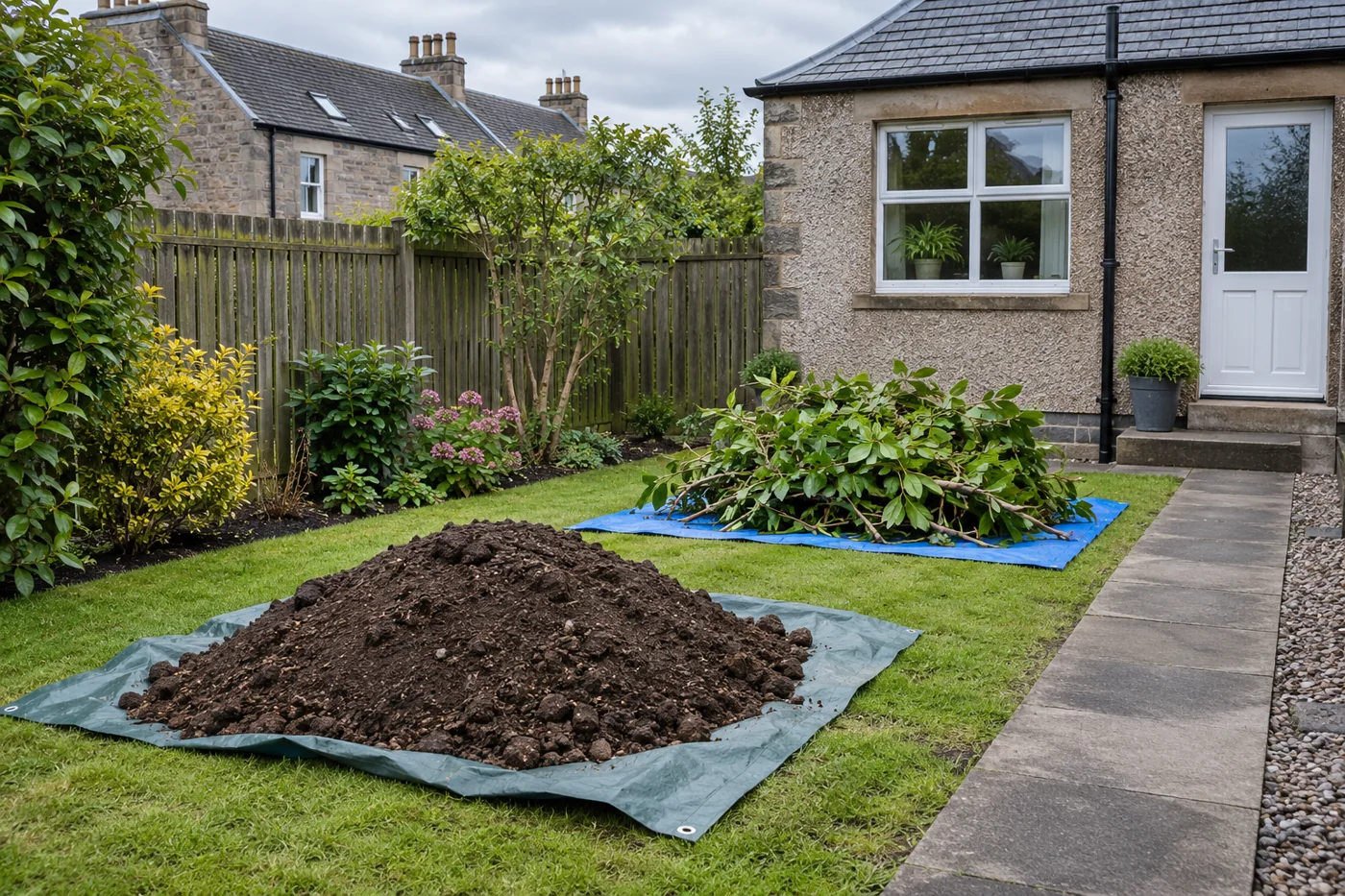
Check the mixture before anything goes in
Soil and branches should only share a skip when that particular load has been agreed. Do not assume that a booking for garden waste includes everything dug out of the garden. Loose soil, stones, hedge cuttings and timber can need different arrangements. Tell us about each part of the job when you call, including anything you expect to uncover later.
A useful description is “two small beds of soil and the cuttings from one hedge”, rather than “a bit of garden rubbish”. We can discuss the skip and waste limits before you book. Keep the piles separate until you have an answer. This avoids filling the container with a mixture that has not been accepted, and helps you compare the service on the basis of the actual waste.
Soil takes weight; branches take space
A pile of branches can look large because of the gaps between the stems. Soil can look much smaller while making a heavy load. The outside size of the skip does not tell you how much of each material can go inside it. Its volume and the agreed weight allowance both matter, and a larger skip is not automatically suitable for more soil.
Describe the approximate size of each pile and the work that produced it. Mention gravel, paving, stones or concrete separately from the earth. Our skip size guide helps explain the container choices, but the final size still depends on the contents. Do not book by the biggest-looking pile alone. If you add a second garden job after booking, call to check the changed load first.
Mention soil attached to roots and turf
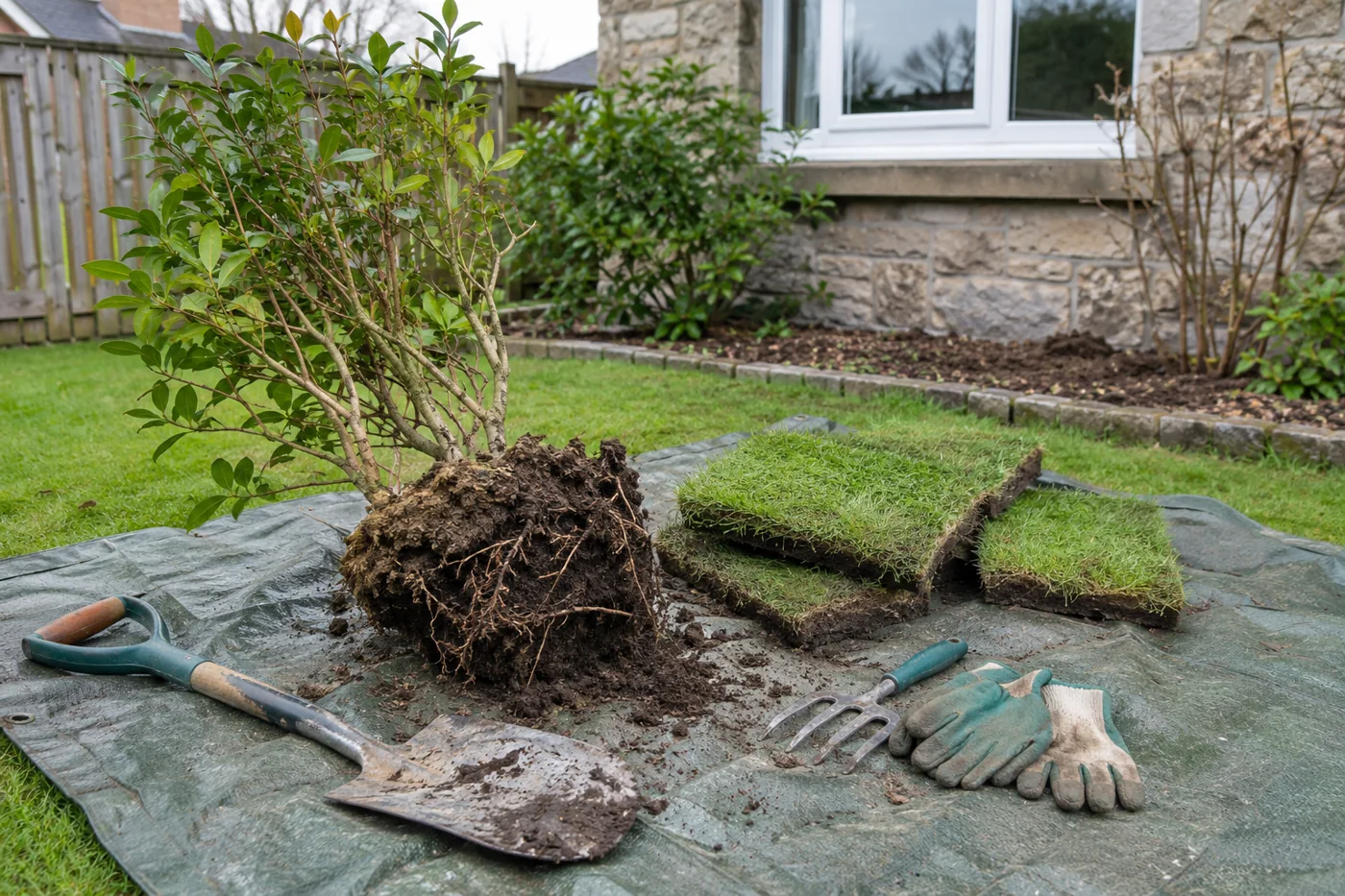
Lifting turf or removing a shrub often brings earth with it. A root ball is not the same load as a bag of leaves, and turf can contain a substantial layer of soil underneath the grass. Tell us whether the waste is loose cuttings, lifted turf, small roots or larger woody pieces. Do not describe all of it as green waste and leave the soil out of the conversation.
Explain the approximate size of roots and long branches too. You should not have to wrestle an awkward piece over the side of a skip. Ask how it can be handled within the agreed service before moving it. Do not cut or break an unfamiliar buried material simply to make it fit; stop and identify what you have found before deciding how to deal with it.
Keep separate piles while you plan
Choose a place for the waste that leaves the garden gate and any shared route usable. Keep soil, cuttings and doubtful items apart while the booking is being arranged. A ground sheet can help contain a small pile where it is suitable, but it does not make a heavy load easy to lift. Keep the sheet and loose edges out of the walking route.
Avoid filling bags so heavily that you cannot handle them comfortably. Plan smaller movements and suitable equipment rather than one difficult lift. If there are steps, a steep path or a long carry from the back garden, mention them on the call. The route to the skip can change how practical self-loading will be, even when there is plenty of room for the container at the front.
Keep doubtful garden items out
A garden clear-out can also uncover old paint, chemicals, batteries, electrical tools or unidentified sheets behind a shed. These are not ordinary cuttings. Keep liquids and hazardous or suspect materials out of the skip, and ask about any item that has not been included in your booking. Do not hide containers in bags or empty their contents into soil.
Read our guide to waste that needs checking before starting. If you suspect asbestos in an old shed or buried sheet, leave it undisturbed and seek suitable advice. HSE’s asbestos guidance is a useful starting point. An ordinary skip booking does not include asbestos removal, testing or a promise to take an unknown material.
Stay within the agreed fill and weight limits
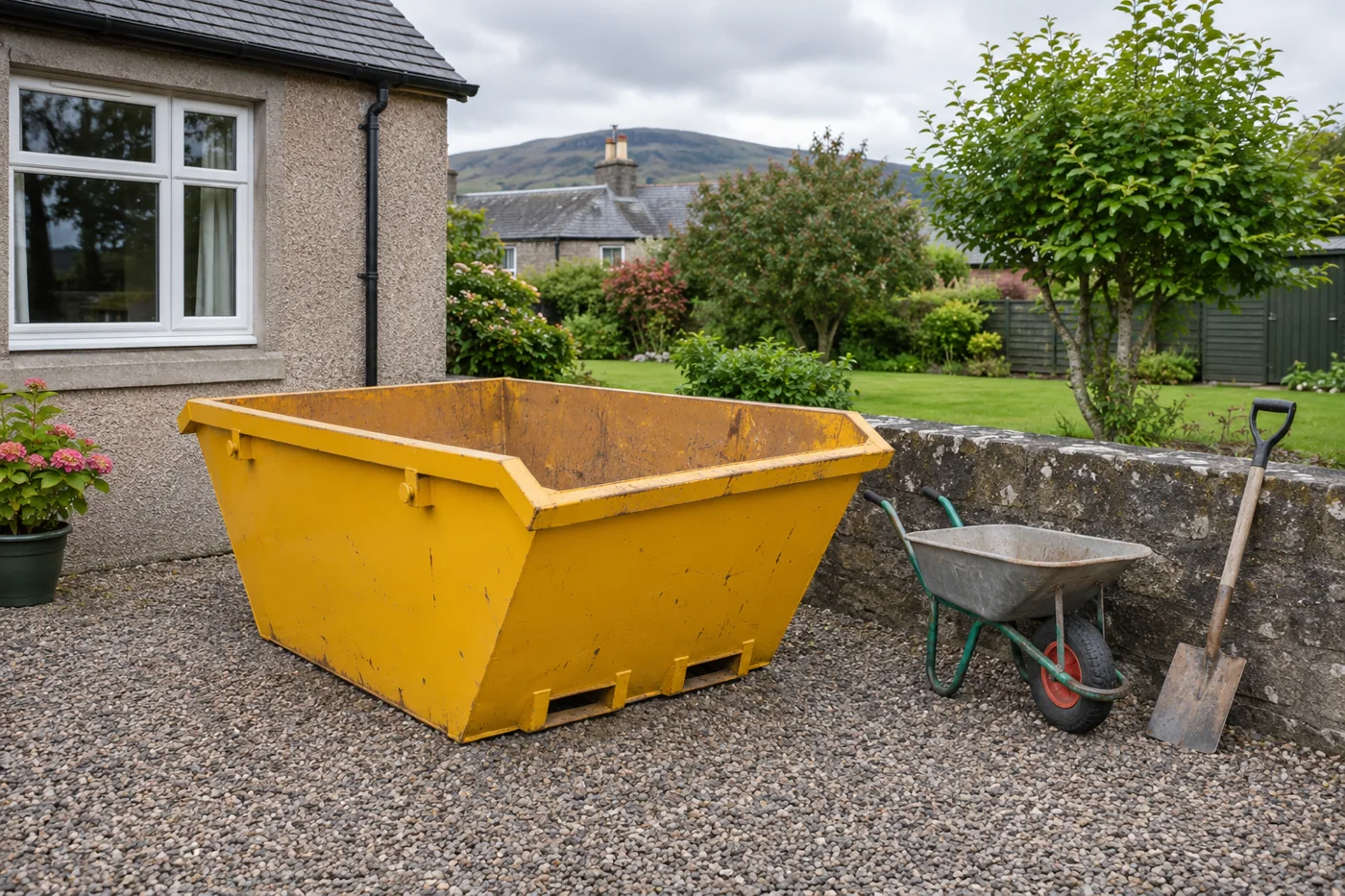
Once the contents have been agreed, load from a stable position on the ground. Keep every piece below the allowed fill level and within the skip sides. Long branches must not project beyond the container. Do not climb onto the waste to compress it, or use boards to raise the sides and squeeze more in.
Keep to the soil allowance even if the container still looks partly empty. Space left at the top does not cancel a weight limit. If the pile is larger than you described, stop and call about the next step. Our practical skip-loading guide covers clear routes, awkward items and collection access. It is easier to agree more capacity before loading than to remove a heavy excess afterwards.
Plan the position before the garden work starts
A private drive can be convenient, but the lorry also needs suitable access to place and collect the skip. Describe gates, overhead obstructions, tight turns and the surface where it would stand. Do not judge delivery access from the container width alone. The delivery guide explains what to discuss before choosing a position.
If the proposed position is on a public road, check the permission needed before arranging delivery. Clackmannanshire Council’s skip-permit guidance asks for an application at least ten working days before placement; this is an application lead time, not guaranteed approval. Same-day delivery depends on availability, suitable access and any required permission already being in place. Keep collection access clear throughout the hire.
Tell us what is in the garden pile
When calling for skip hire in Alloa, have your postcode, preferred date and proposed position ready. Describe the soil, branches, turf, roots and other materials separately. Explain the size of the piles and any steps or narrow passages between the garden and the skip. Ask which contents, fill level and weight allowance will apply to the quote.
If you would prefer help with lifting and loading, ask about rubbish removal and describe the garden materials before a collection is agreed. Do not assume every garden load is suitable for that service. For either option, a clear account of the waste lets us discuss what is possible without guessing from the size of the garden alone.