Keep the booking details together
Before delivery day, put the important details in one place: the address, skip size, agreed waste, hire dates and proposed position. If a family member or builder will meet the driver, make sure they have the same information. A postcode alone may not identify a rear drive or an entrance on another street, so give the actual approach when booking.
We arrange skip hire in Alloa by phone around the waste and access for your address. Use the delivery, hire and collection guide to settle any missing detail. Confirm the delivery arrangements rather than planning your day around an arrival time you have not been given. Keep the booking contact number handy if something changes before the lorry sets out.
Make sure the position is agreed
Decide where the skip is intended to stand before carrying waste outside. For private space, tell us about the surface, slope, covers and any shared access. Discuss ground protection where needed; boards are not a guarantee against marks. If someone else owns or uses the space, get the necessary agreement instead of treating an empty patch as permission to use it.
A public-road position needs council permission. Clackmannanshire Council’s skip guidance requires an application at least ten working days before placement; that is notice for an application, not guaranteed approval. Read the Alloa permit guide and agree who applies. Same-day delivery depends on availability, suitable access and any required permission already being in place.
Move the car and clear the approach
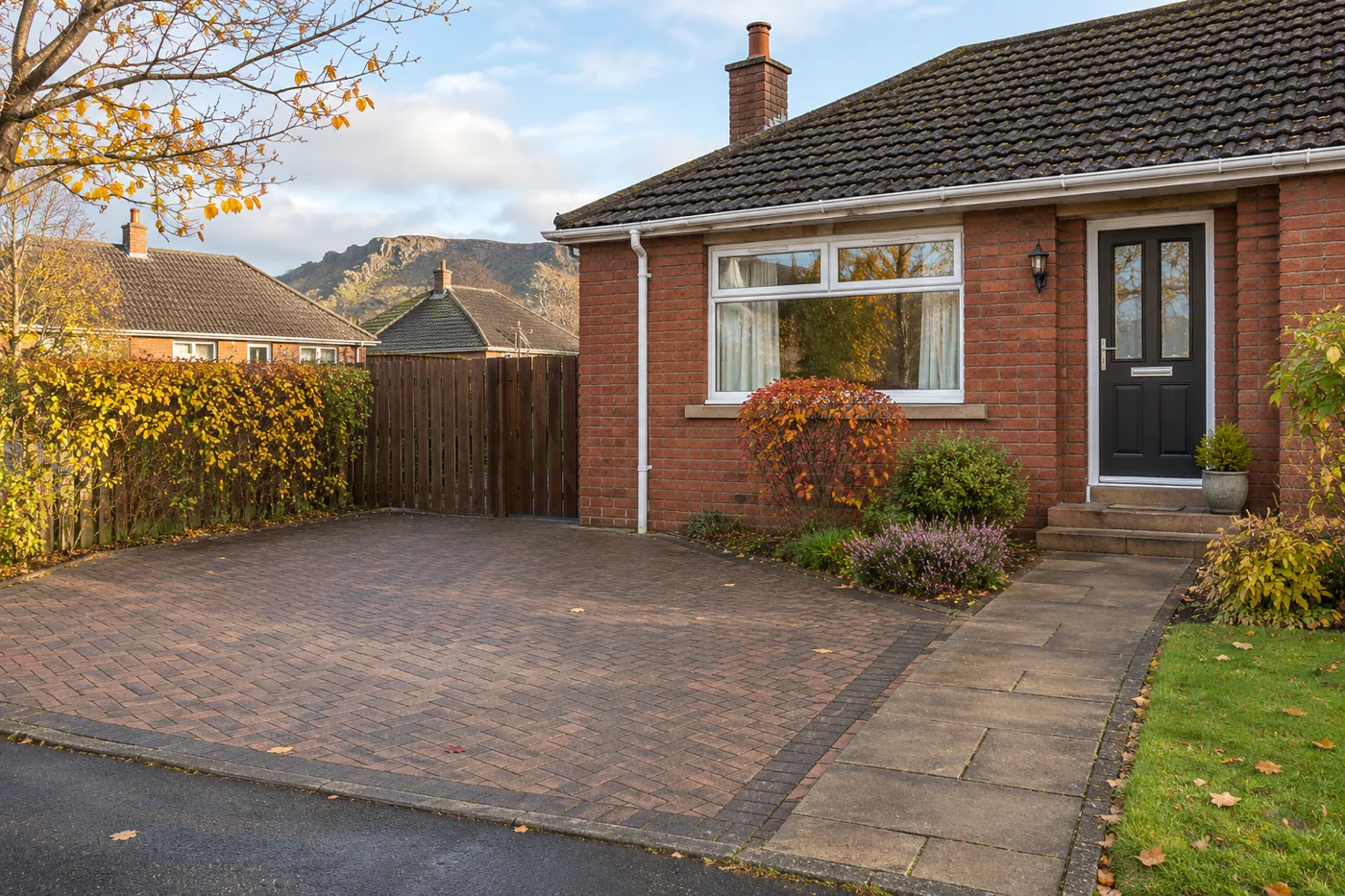
An empty place for the skip is only part of delivery access. The lorry must reach the position and have room to place and later lift the container. Move your own car out of the agreed approach before the lorry is due, and tell anyone sharing the drive which space needs to stay clear. Do not rely on being able to move everything once the lorry is waiting.
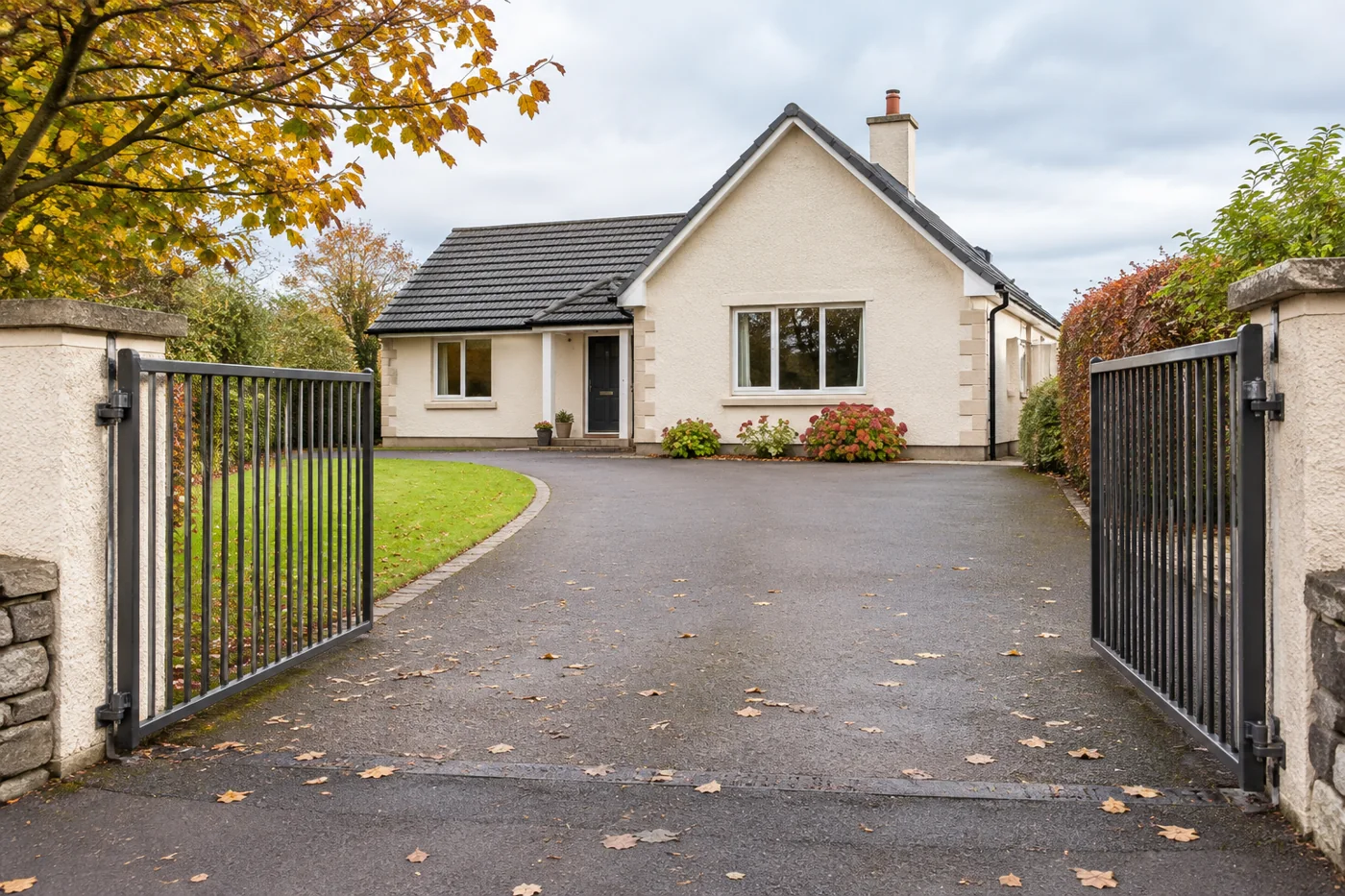
Check gates, tight turns and anything overhead, including branches and cables. Tell us about a restriction rather than guessing a safe gap or cutting back around a power line. Our driveway planning article explains the difference between space for the skip and room for the vehicle. Recheck access if scaffolding, fencing or parked vehicles have changed since booking.
Keep a route from the job to the skip
Walk the route you will use to carry waste from the house, garage or garden. Leave doors, gates and any shared entrance usable. Put the first pile where it will not block that route or the lorry’s position. A few boards across a doorway can cause problems before you have even started loading, particularly when other people still need to come and go.
Think about the largest awkward item as well as loose bags. Measure the turns it has to pass through and plan suitable help if it cannot be handled comfortably. Keep children and pets away from stored rubbish and the delivery area. If the main problem is lifting and carrying, ask about rubbish removal as a separate loaded collection before deciding how to clear the job.
Sort the waste without filling the driveway
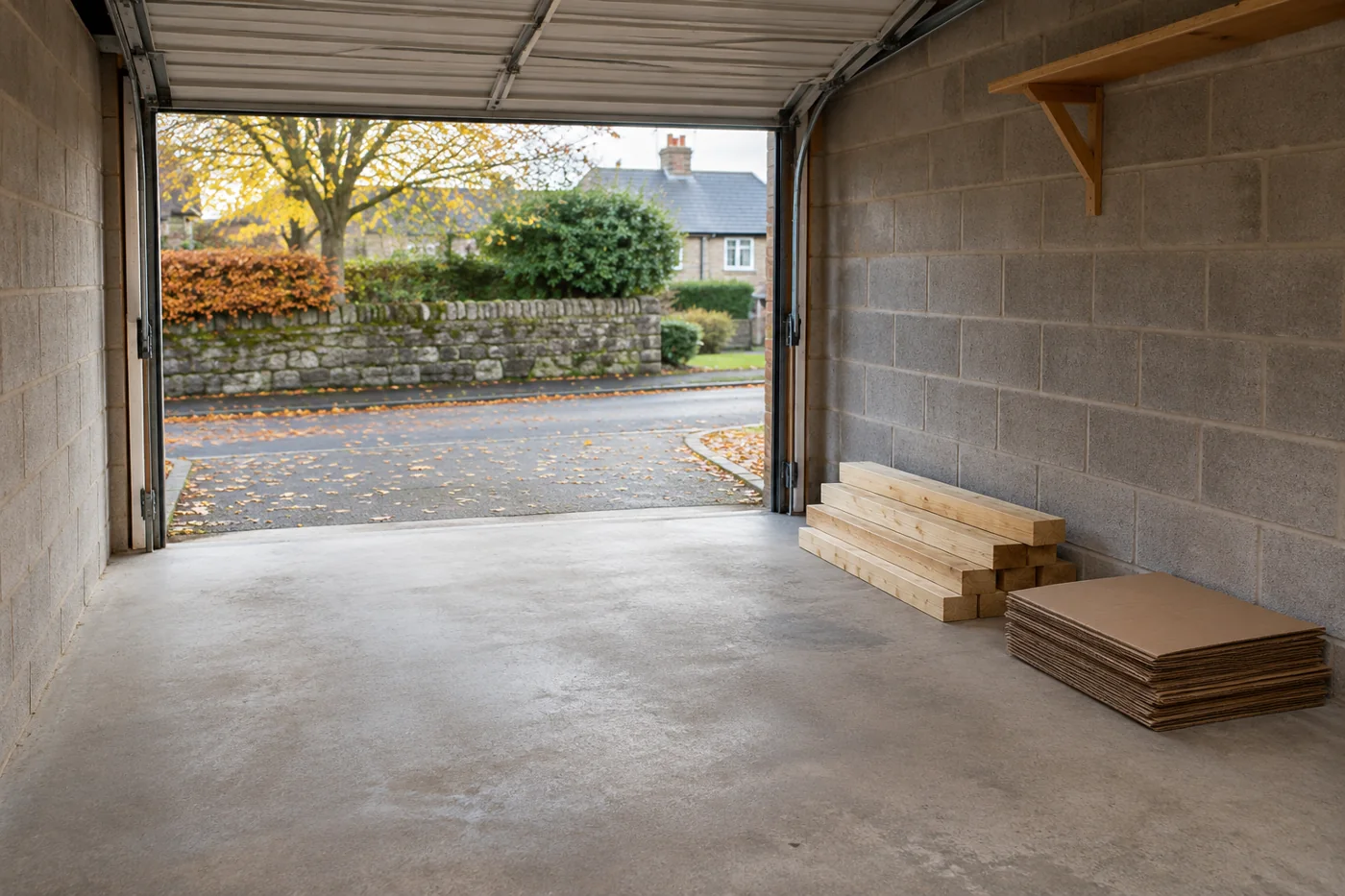
Set aside the materials included in your booking and keep uncertain items separate. Short manageable timber pieces and flattened empty packaging are easier to organise than a mixed heap across the drive. Keep fixings contained and avoid making bags too heavy to handle. Do not dismantle connected appliances or disturb an unfamiliar panel just to get everything ready for a skip.
Look at the accepted-waste guide if another material appears during the work. A booking for old cupboards does not automatically include plasterboard, electrical items, chemicals or soil found elsewhere. Call before adding a different waste type. Keep the prepared pile clear of the delivery position; the driver needs somewhere to put the empty skip before you can start loading it.
Leave room for other deliveries
A kitchen delivery, scaffolding visit or builder’s van can need the same space as the skip lorry. Tell everyone working at the property how the skip is being delivered and which approach must remain clear. Agree where new materials will go so they do not take the reserved position immediately before arrival. Avoid making two vehicles depend on using the same narrow entrance at once.
If you will need your car later, work out how it can leave after the skip is in place. Do not park behind the intended position and expect to move the skip yourself. Think ahead to collection as well: a pile of new paving or replacement fence can close off a route that was clear at delivery. Mention these planned changes on the booking call.
Let the driver manage the delivery
When the vehicle arrives, identify the agreed position from a safe place and follow the driver’s directions. Keep other people out of the working area while the lorry moves and the skip is lowered. HSE’s lifting-operation guidance explains why people need to stay clear of the vehicle and container. Do not approach to help with chains or stand behind the lorry to guide it yourself.
Wait until the driver confirms that placement is complete before you begin loading. If the position cannot be used as planned, explain the problem and agree the next step. Do not rush into a different road position or move the container after delivery. Once it is ready, use our loading guide to fill it within the agreed limits.
Call early if the plan has changed
Before delivery, check that the position is available, access is clear and the waste is still the load you described. Have a way to answer any practical question about the entrance. Call as soon as you know that building work, a blocked drive or a changed date will affect the delivery. Ask how revised arrangements and any charges work instead of assuming the original booking covers the change.
Keep the collection plan with these details too. Agree the hire period and how to request removal when you finish; the end of your clear-out does not itself book a lorry. Our guide to when to arrange skip collection covers the next stage, including keeping access clear and allowing for road-permit dates.