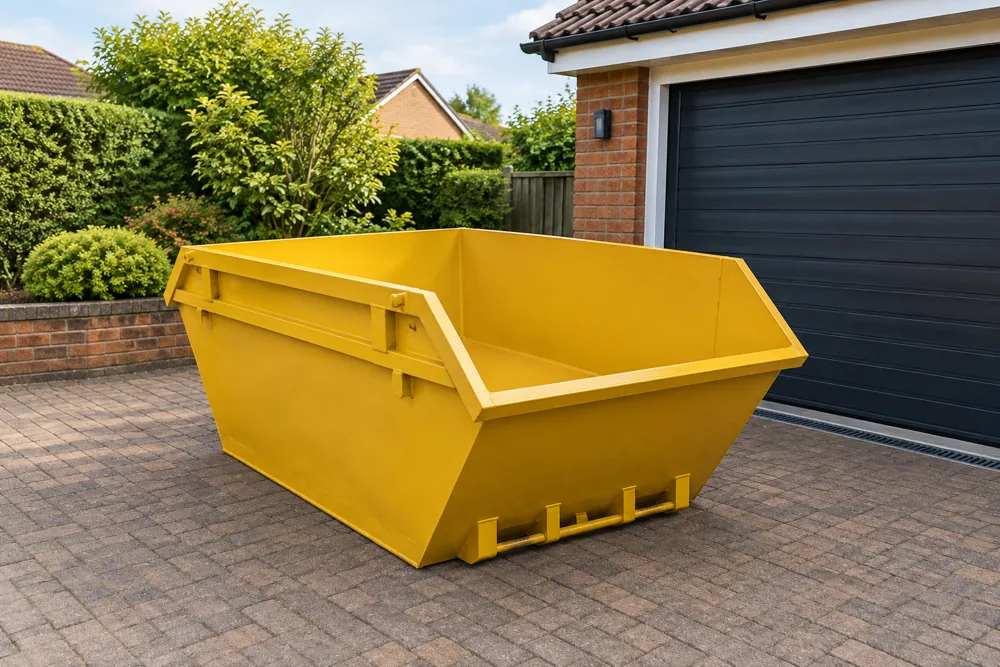
The short answer: measure the space and the approach
A 2-yard skip is a compact choice for a small clear-out, and a suitable private driveway can be a useful place to put one. It keeps the skip close to the work and can leave the public road free. Whether it works at your home depends on more than the empty patch you can see from the window.
You need room for the skip, a safe route to carry waste to it, and access for the vehicle that delivers and lifts it. A narrow gate, parked car or overhead cable can change the answer. For skip hire in Alloa, call with your postcode and a description of the space so the delivery arrangements can be agreed before you book.
How big is a 2-yard skip?
Our guide dimensions for a 2-yard mini skip are approximately 1.53m long, 1.01m wide and 0.76m high. These are supplier guide figures, not a guarantee of the measurements of the skip available for your booking. Shapes and lifting points vary, so confirm the actual dimensions if the space is tight.
The two yards refer to cubic yards: a measure of how much space the skip holds. They do not describe its length and do not tell you the allowed weight. Read the 2-yard skip size guide for the measurements and waste questions together. Avoid choosing from a number of bin bags alone; bags can be different sizes, and bulky items can leave large gaps.
Measure the driveway without blocking your home
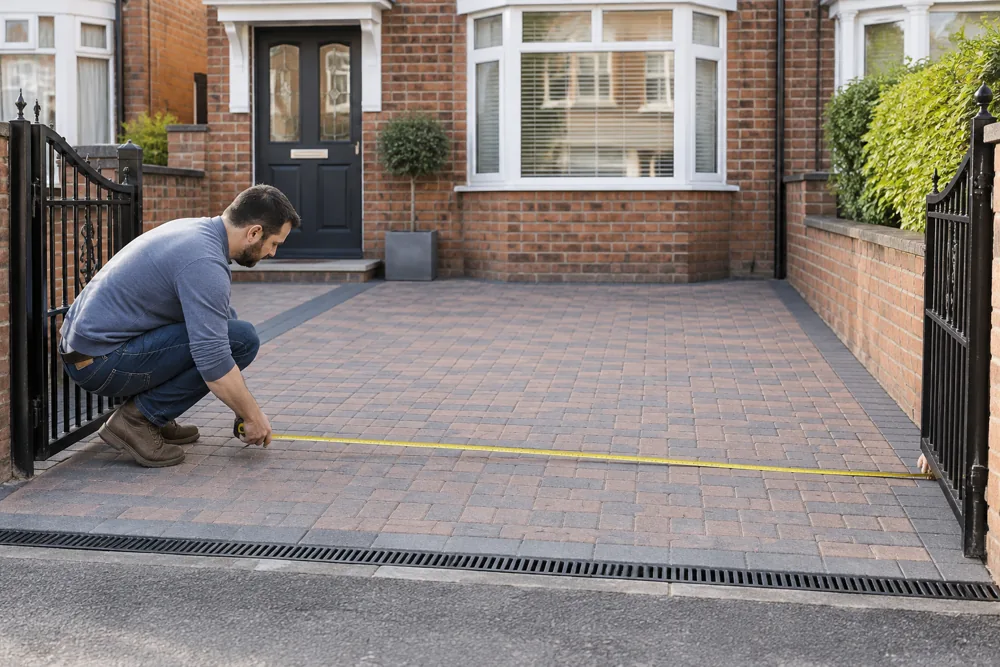
Measure the usable space where the skip would sit, rather than the full width between your boundaries. Leave a clear walking route to your front door, bins and any side entrance you need. Think about the car as well: a skip that fits while the driveway is empty may stop you parking or getting out once it arrives.
Look at the surface and slope. Tell us about loose ground, cracked paving, drainage covers or a steep drive. Do not assume the skip or delivery lorry can go over them safely. Agree any ground protection before delivery, and remember that boards do not remove every risk of marking or damage. If you share the driveway, get the necessary agreement and keep shared access usable.
The delivery lorry needs more room than the skip
A skip can fit through a gap that the delivery vehicle cannot use. Measure the gate opening and describe the approach from the road, including tight turns, low branches, overhead cables and parked vehicles. Mention anything that could prevent the lorry reaching or lifting from the agreed position. Do not guess a safe clearance around an overhead power line.
Check the collection route too. A gate you plan to replace, a pile of building materials or a newly parked vehicle can leave a filled skip difficult to lift. Keep the agreed route clear throughout the hire. Our delivery and collection guide explains what to have ready. The final placement depends on the actual vehicle, ground and safe access, not simply the footprint shown on a size chart.
Will your waste fit safely inside it?
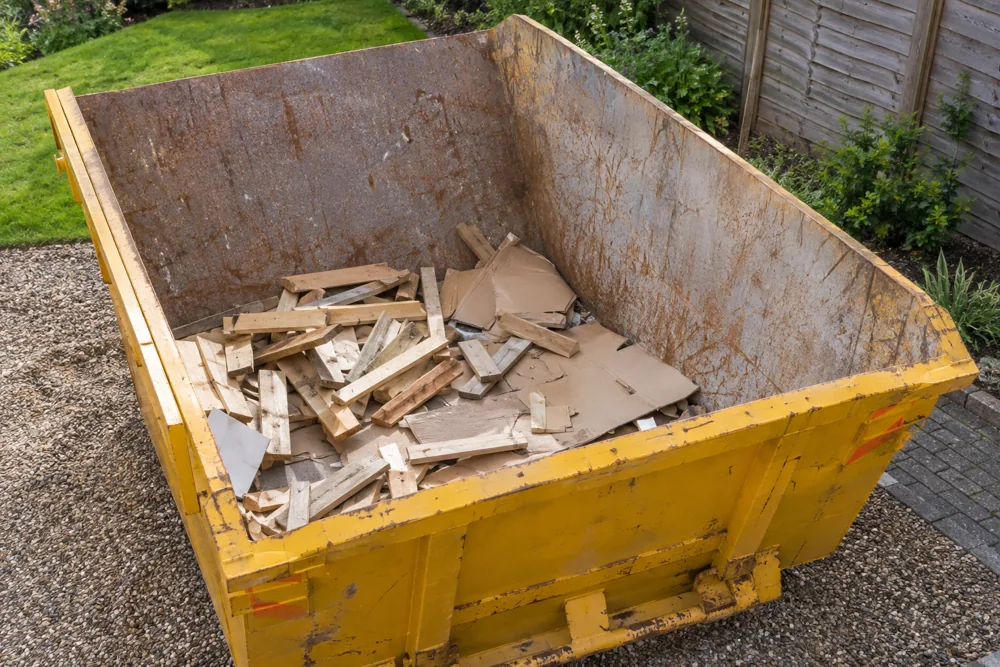
A small skip can suit a modest garden tidy or a limited household clear-out, but first describe what you are throwing away. A long cupboard panel or large piece of furniture may not fit below the rim even when the pile looks small. Measure awkward items and mention them before choosing the skip. Never balance waste above the sides to make a small skip stretch further.
Soil, concrete and rubble are different from light packaging or garden branches. A small volume can be heavy, so agree the waste type and weight allowance before loading. Ask first about plasterboard, electrical goods and other items needing separate arrangements. Keep asbestos, chemicals, liquids, gas bottles and batteries out of an ordinary skip. The waste and safe-loading guide explains these checks in more detail.
What if it cannot go on the driveway?
If there is no suitable private space, discuss the proposed road position before booking. In Clackmannanshire, the council’s current roads guidance asks for an online application at least 10 working days before placement. That is an application notice period, not a promise of approval within ten days. Permission must be in place before the skip arrives.
Agree who applies, the approved dates, any safety equipment and the full charges. A footway or verge is not automatically a private alternative to the road. Read the Clackmannanshire skip permit guide and the council’s current skip guidance before planning road placement. Do not rely on an assumption that a small skip needs no permission.
What to have ready when you call
Have your postcode, preferred delivery date, waste description and driveway measurements ready. Explain gate widths, surfaces, overhead obstructions and anything that will change during the work. Agree the actual skip dimensions, hire period, price, permitted waste and collection process. Call when the skip is ready for collection rather than assuming it will leave automatically.
If you have a single pile ready now and would prefer someone else to load it, a skip may not be the most useful starting point. Our guide to man and van rubbish removal versus a skip explains the practical difference. You can then call about the option that suits the waste, the space and how much lifting you want to do.