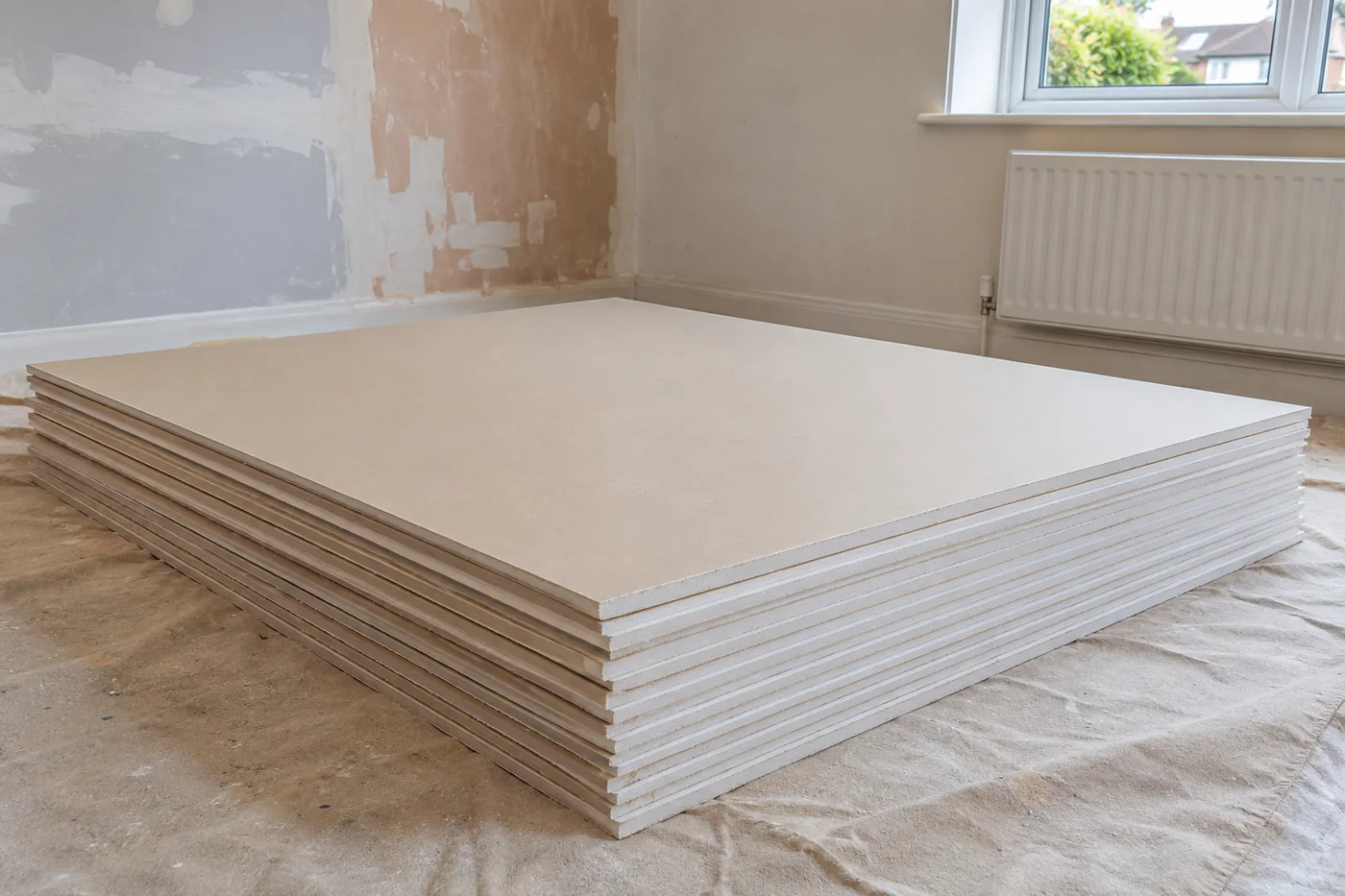
Ask before putting plasterboard in a skip
Keep known plasterboard in its own pile from the start of the job. Tell us about it when you call. Even if you have already arranged a skip for old cupboards or tiles, confirm separately how the plasterboard will be dealt with. Avoid throwing a small piece into a bag with the rest of the rubbish, where it becomes harder to spot and sort.
Plasterboard usually has a gypsum core between paper faces. Hydrogen sulphide gas can form when gypsum waste is buried alongside waste that rots, such as garden cuttings. SEPA explains the reason for keeping those wastes apart in its gypsum guidance. The practical step at home is to sort it as it comes out, before anyone loads a mixed skip.
Describe clean offcuts and old board separately
Fresh offcuts from fitting a new wall and old board taken off a ceiling may need different arrangements. Older pieces can have tiles, timber, insulation or several layers of finish attached. Say what you can see safely and explain if the waste is damp, broken into pieces or mixed with other rubble. Check what the chosen facility accepts before trying to separate attached material.
Try describing the amount in whole boards or the equivalent. For example, tell us if several little offcuts would together cover roughly the area of one board, or if you have a pile of pieces from an entire ceiling. This makes a better starting point than the number of bags, which depends on how they were filled.
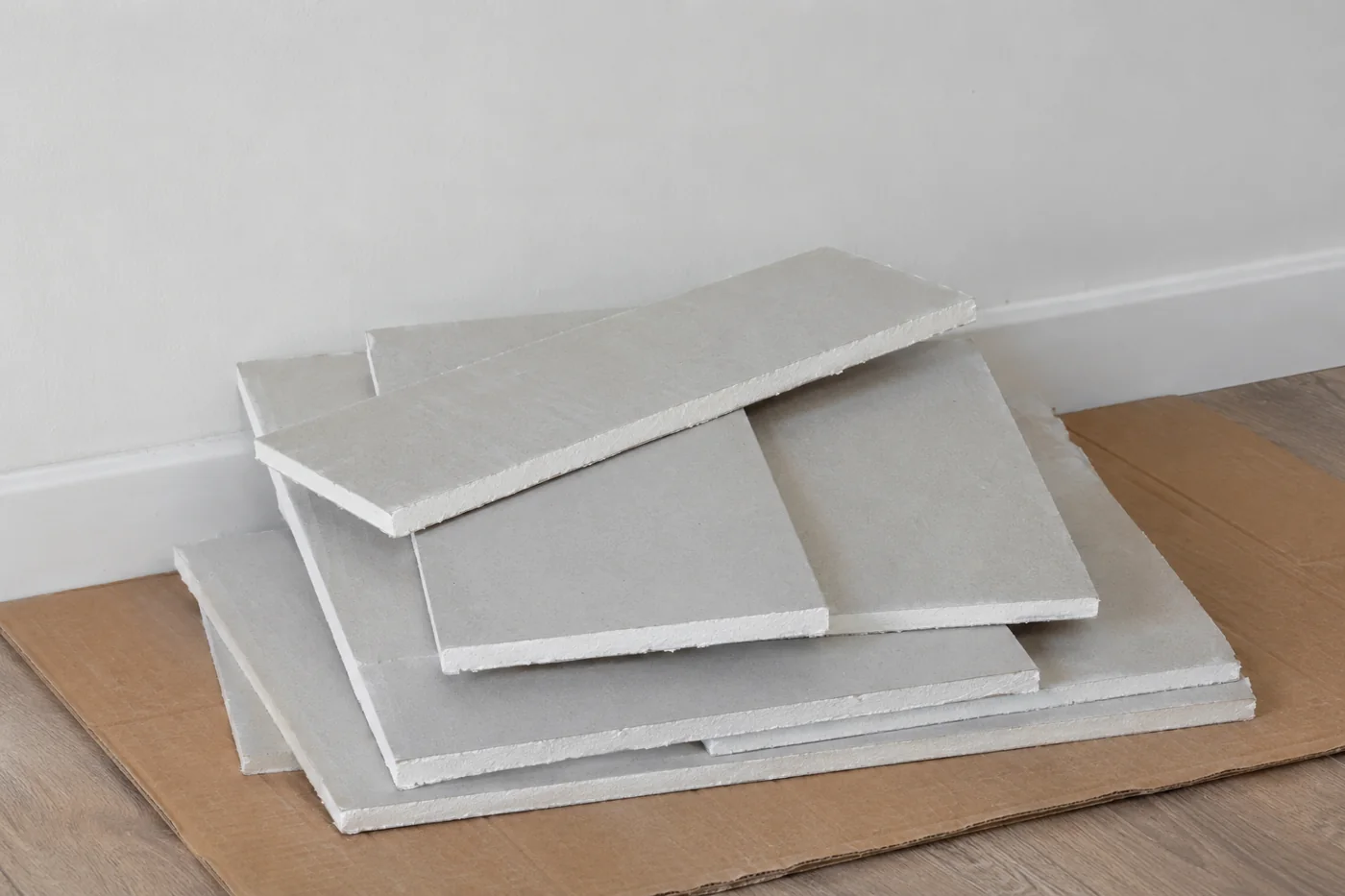
Check the Forthbank household limit
Clackmannanshire Council’s Forthbank waste guidance limits household plasterboard to the equivalent of one standard board per visit. The council asks visitors to empty any bags or containers at the point of disposal. Read the current Forthbank entry guidance for residency, ID and vehicle rules before travelling.
Forthbank does not take plasterboard from commercial customers. If a fitter is doing the work, sort out who is responsible for taking the waste and what disposal route they will use. For a bigger household job, speak to a suitable waste service before work starts. That lets you plan for the whole amount without arriving with more board than the centre accepts.
Keep the pile dry and the room usable
For known board that is already loose and safe to handle, agree a dry place to put it as the job goes along. Keep the stack low and stable, away from stairs, doors and the route people need to carry tools through. Avoid leaning large pieces where they can slip or making a bag so heavy that nobody can lift it comfortably.
If other materials are coming out of the room, give each pile a clear place. Tell anyone working on the job which pile is board and which waste is going into the skip. Keep new sheets for fitting away from the waste pile. Planning the space early makes it easier to keep the materials apart as the room is emptied.
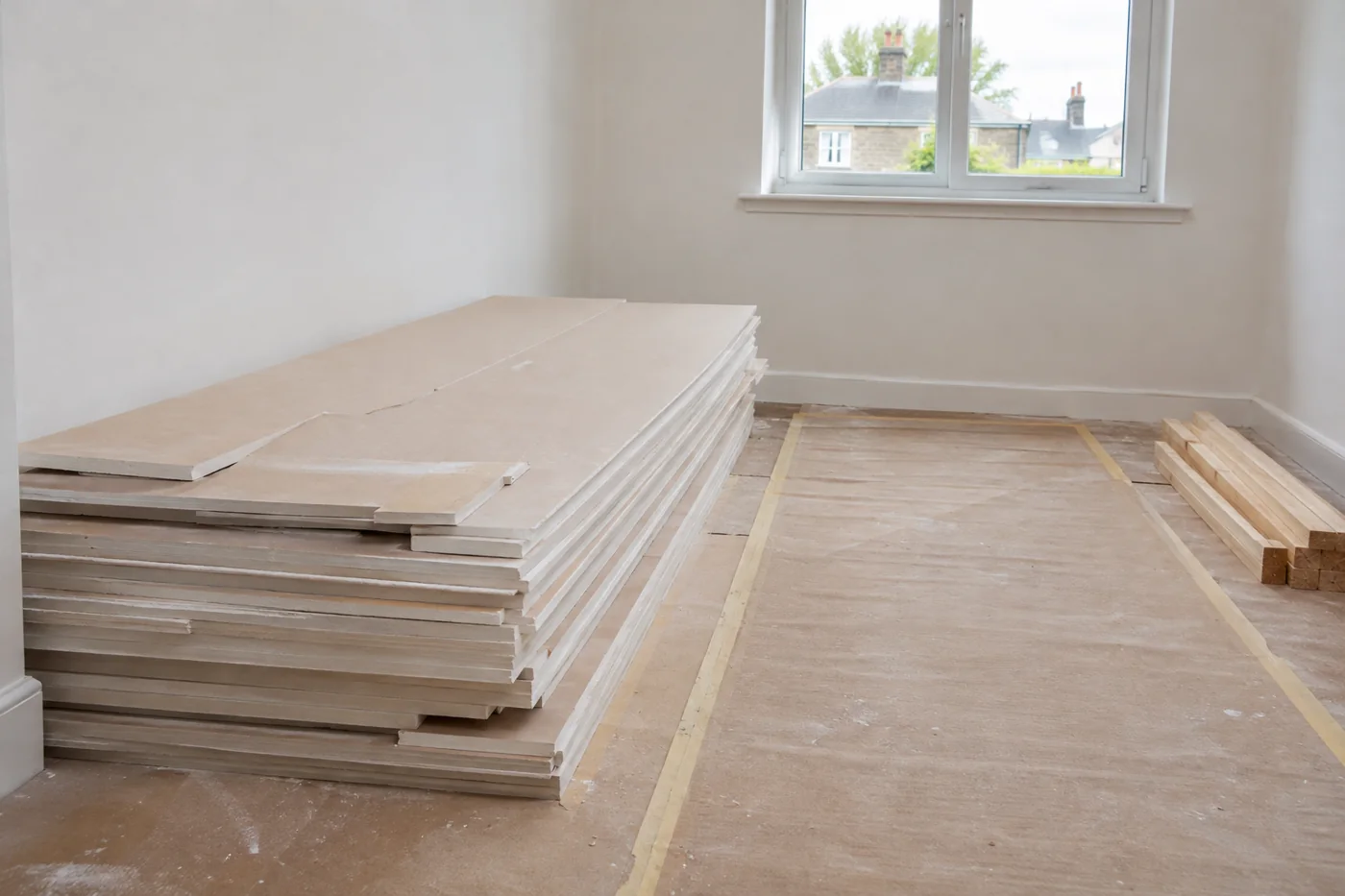
Stop if an old lining might contain asbestos
Some refits uncover linings or finishes that are hard to identify. Colour or a broken edge alone cannot tell you whether an old sheet contains asbestos. If you suspect asbestos, stop and leave the material undisturbed. Do not cut it up, take a sample yourself or put it in with known plasterboard. Seek advice from a competent asbestos professional. See the HSE asbestos guidance.
Tell the person responsible for the work if the material is already broken or there is dust you are concerned about. Seek advice before handling the debris. A household plasterboard allowance or an ordinary skip booking does not cover suspect asbestos material.
Call if plasterboard is already in the skip
If someone adds board after loading has started, pause and tell us what went in and roughly how much. Say if it is under other waste or attached to anything. Ask what needs to happen before the skip can be collected. Avoid climbing in, reaching under an unstable pile or emptying the load into a shared space to try to fix it yourself.
Agree what the rest of the job will produce, too. If the work is continuing, give everyone the updated sorting plan before they add more waste. Our skip loading guide explains the fill line, awkward pieces and safe access. Use the waste guide to check other materials that may need their own arrangements.
Plan a skip for the rest of the refit
For skip hire in Alloa, tell us how much plasterboard there is and list the other waste separately. For a kitchen job that could mean old cabinets and worktops, tiles and the packaging that comes later. Our small kitchen refit guide helps you plan those stages and agree which items the fitter is taking away.
When you call, have your postcode, preferred dates and proposed skip position ready. Find out whether the booking can cover the materials you have and how any separate disposal needs to be arranged. Ask for the total price and which costs it includes before confirming. Put the agreed instructions somewhere the people loading the skip can see them.