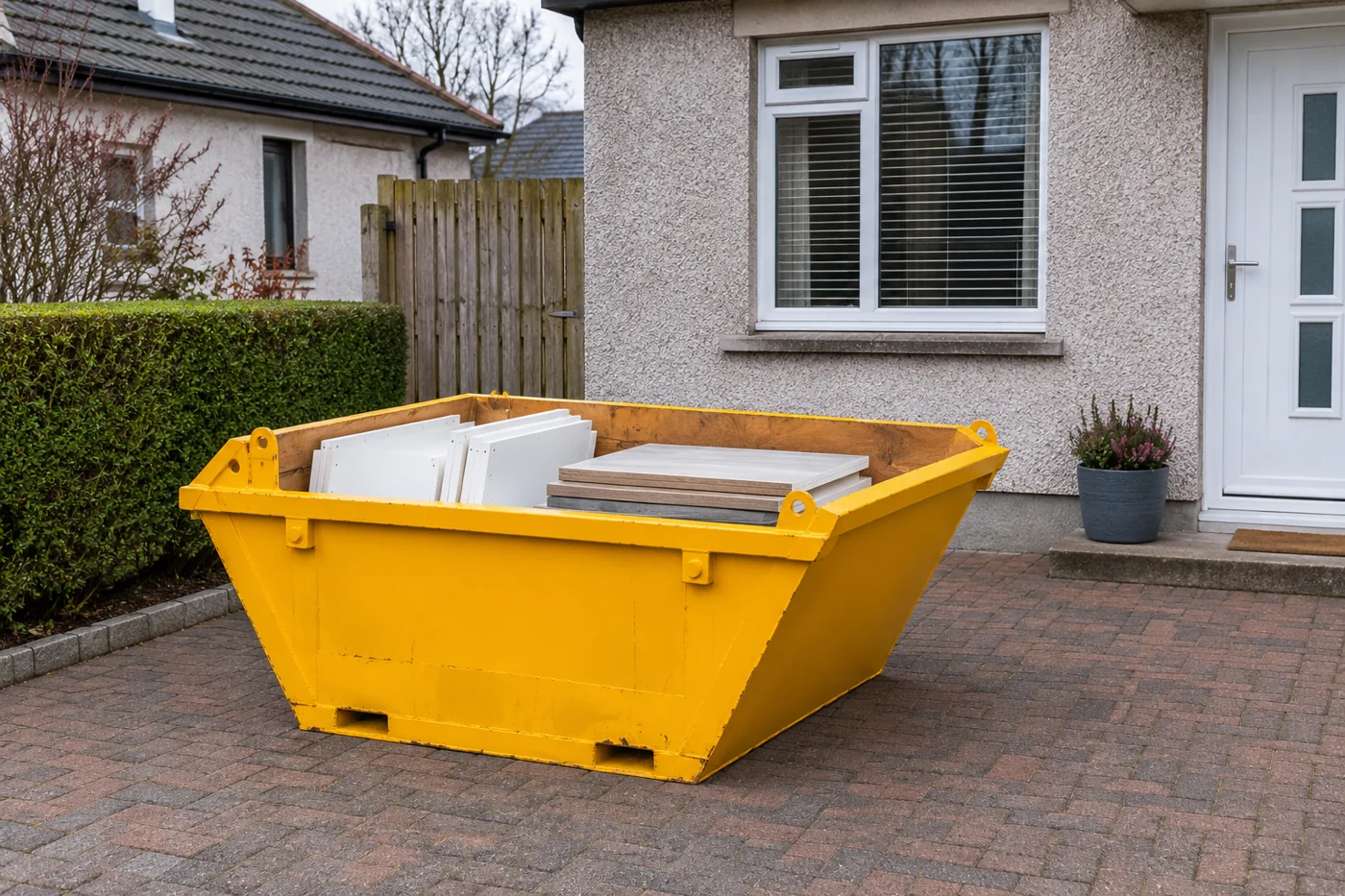
Start with what is coming out
A small kitchen can produce more waste than its floor area suggests. Cupboards contain shelves, backs, doors and drawers as well as the outer cabinets. Add worktop pieces, old flooring and packaging from new fittings, and the pile can grow quickly. Before booking, list what will actually be removed rather than choosing a skip because the room is small.
Separate the list into ordinary units and worktops, heavier material such as tiles, and items that need checking. Tell us whether you are replacing a few cupboards or clearing the whole room. We offer skips and rubbish removal for Alloa clear-outs, so we can discuss the waste and access with you. The booking should describe the load you expect, including materials your fitter says will be taken out.
Allow for waste at more than one stage
Old fittings may come out before the new kitchen arrives, while packaging builds up later. Agree with your fitter which waste they will remove and which waste you are arranging yourself. Otherwise you could book a collection too early or pay for space intended for material someone else is already taking away. Confirm these responsibilities before the old fittings are removed.
Think about where the remaining rubbish will wait between stages. Keep the entrance, stairs and kitchen exit usable rather than making a tall pile beside the door. If your schedule changes, call about the hire or collection timing; do not assume an extension or a second visit is included. Our guide to skip hire quotes explains useful questions about contents, hire time and additional arrangements.
Make old units manageable without unsafe lifting
Loose drawers, shelves and doors can be removed before a cupboard is moved where it is safe to do so. Keep small fixings contained and avoid leaving sharp pieces on the carrying route. Short flat panels usually leave fewer empty gaps than complete cabinets, but saving skip space is not a reason to attempt a dangerous lift or smash unfamiliar materials.
Ask the people carrying out the refit to deal with dismantling and any disconnection within their agreed work. A waste booking is not a plumbing, electrical or gas service. Do not cut pipes, disturb wiring or pull out a connected appliance to prepare it for collection. If an item is too heavy or awkward to handle comfortably, explain that when arranging help instead of assuming it will become easier once the skip arrives.
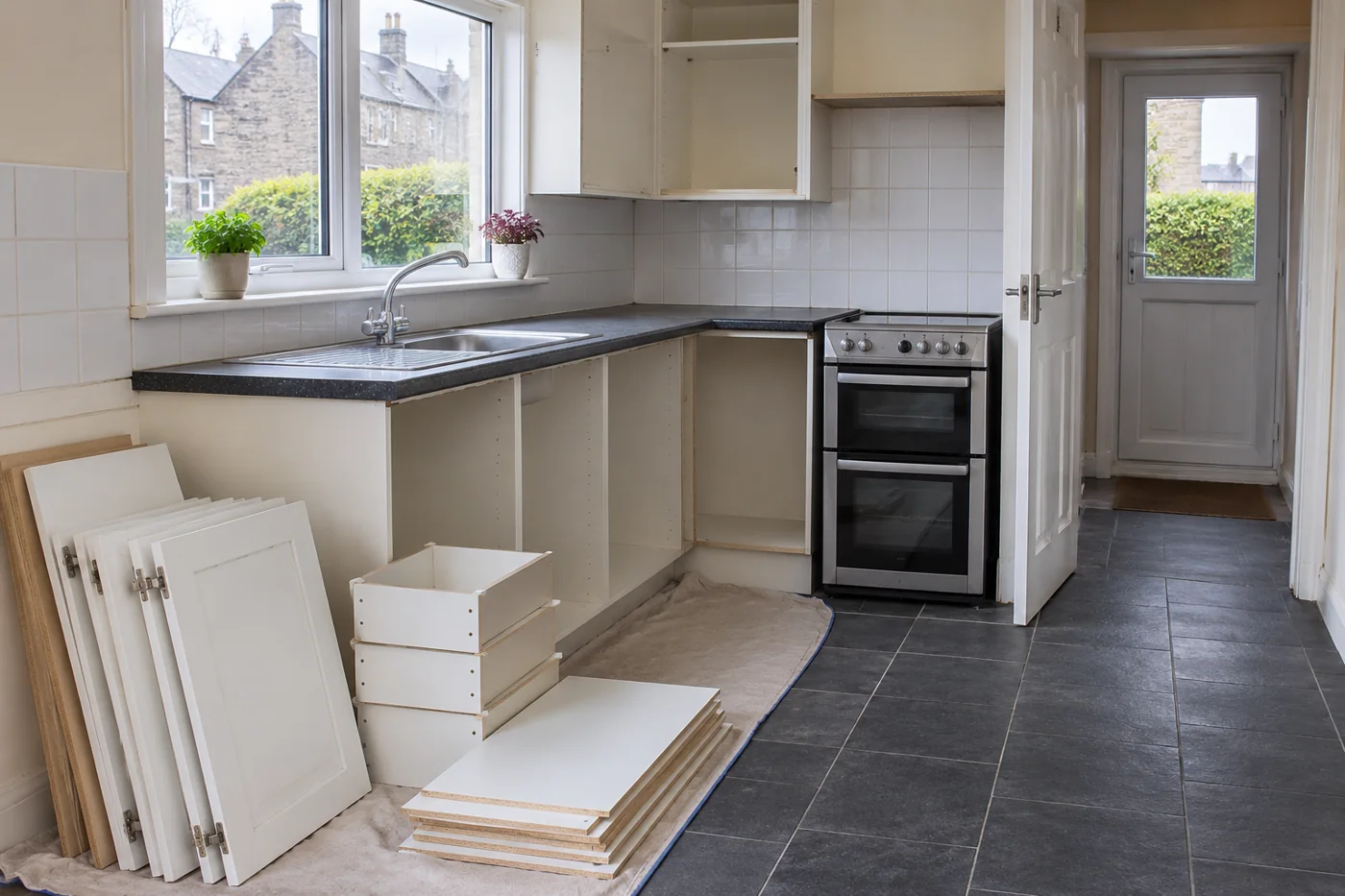
Check appliances, plasterboard and other separate items
A fridge, oven or washing machine should not be treated as another cupboard panel. Mention appliances individually before booking and agree a suitable disposal route. The same applies to plasterboard, upholstered seating, paint, liquids and chemicals found during the clear-out. Acceptance is not automatic, even when these items came from the same room as the ordinary waste.
Use the accepted-waste guide to prepare your questions. If removing old finishes uncovers a suspect material, stop work on that material and seek suitable advice before it is broken or moved. HSE’s asbestos guidance explains the need for care around possible asbestos. Do not put unidentified sheets or debris into an ordinary load and rely on the collection to sort it out.
Choose between a skip and loaded rubbish removal
A skip can suit a job where waste is produced over several days and you have a suitable place to keep it. You or your agreed helpers load it within the confirmed contents, fill and weight limits. Our skip size comparison is a starting point, but the materials and amount still need to be discussed. A small room does not guarantee that the smallest skip is enough.
With rubbish removal, lifting and loading are part of the agreed collection. Describe the pile, individual heavy pieces, stairs and carrying distance so the work can be quoted. Read our skip versus man-and-van guide if you are deciding between them. Neither option automatically includes specialist disposal, appliance disconnection or building work.
Leave room for packaging without blocking the house
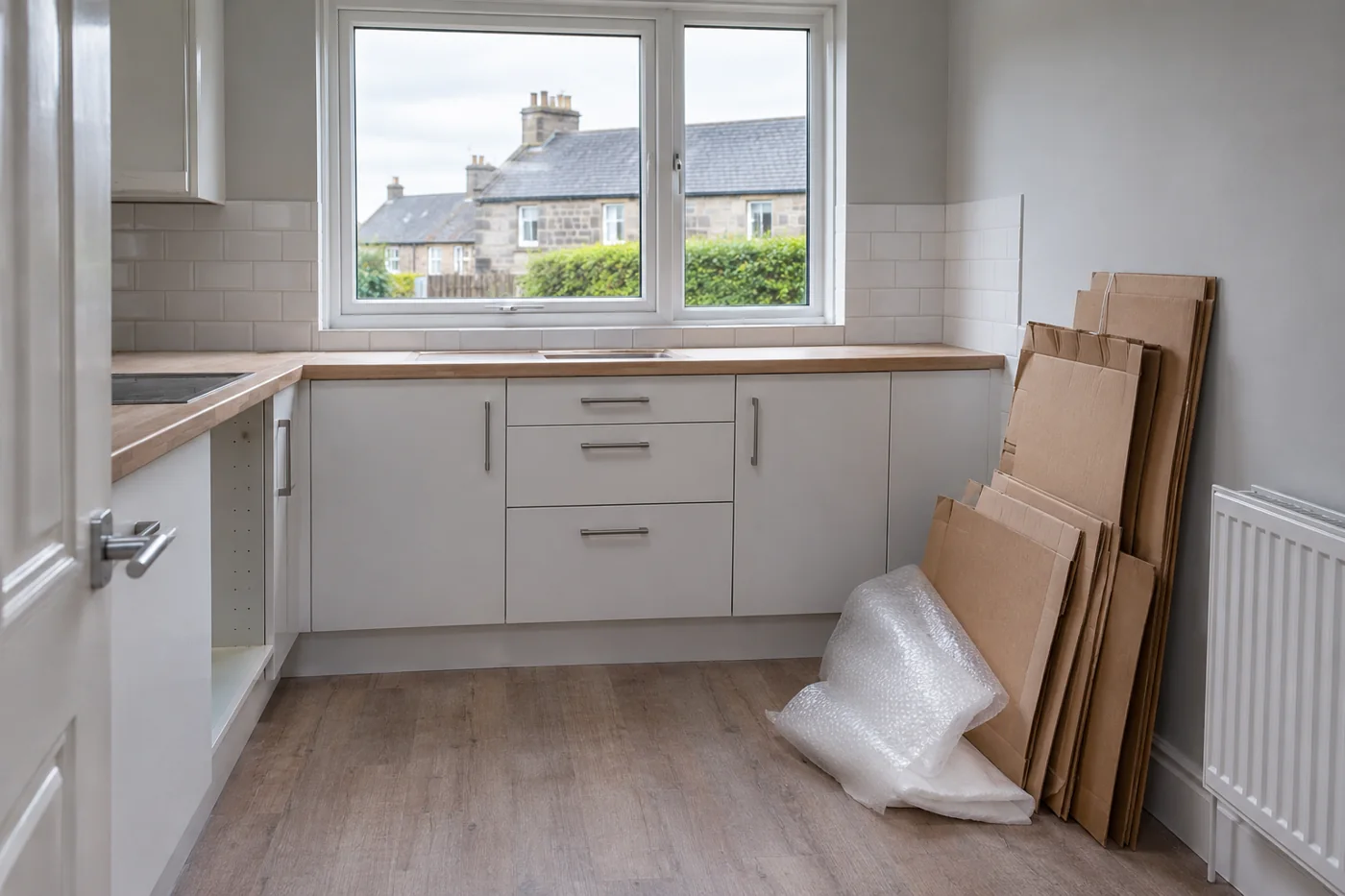
New units and fittings may arrive in bulky boxes. Flatten suitable empty cardboard and keep it together, away from doors and routes used by the fitters. Check that packaging is included in the agreed waste before adding it to the skip. Remove and separately identify anything left inside a box; a closed carton does not make its contents suitable for disposal.
Keep packaging dry where practical and avoid leaving loose wrapping where it can blow across the drive or trip someone indoors. Do not use cardboard to hide another waste type under the surface of the load. If there is far more packaging than expected, call before overfilling the container. Keep the walkway clear and arrange enough space for the agreed waste instead of forcing extra boxes above the fill line.
Keep space for the skip lorry and kitchen delivery
Think about the skip and the new kitchen delivery together. A skip placed where a van needs to unload can make the next stage awkward, while pallets of new units can block the lorry at collection time. Describe the proposed position, driveway surface, gates and any tight approach before the skip is booked. Our delivery and access guide covers the details to discuss.
If the skip would stand on a public road, use the local permit guide to plan ahead. Permission needs to be in place before the delivery; it cannot be assumed because the job is urgent. Same-day service is subject to availability, suitable access and any required permission already being in place. Keep children and other visitors clear when the lorry is placing or lifting the container.
Call with the waste list and your refit dates
For skip hire in Alloa, call with your postcode, date for removing the old fittings and the waste list. Tell us about old units, worktops, tiles, flooring, packaging and any separate items. Explain where the skip could stand or where the pile will be collected, including stairs and narrow passages. Ask what is included and how to arrange collection when the work is finished.
Before anyone starts loading, make sure the fitter and other helpers know what has been agreed. Keep all waste within the fill level and follow the skip-loading advice for long panels and awkward pieces. If the refit reveals more waste or a different material, call to check the changed load rather than adding it on the assumption that a kitchen booking covers everything.